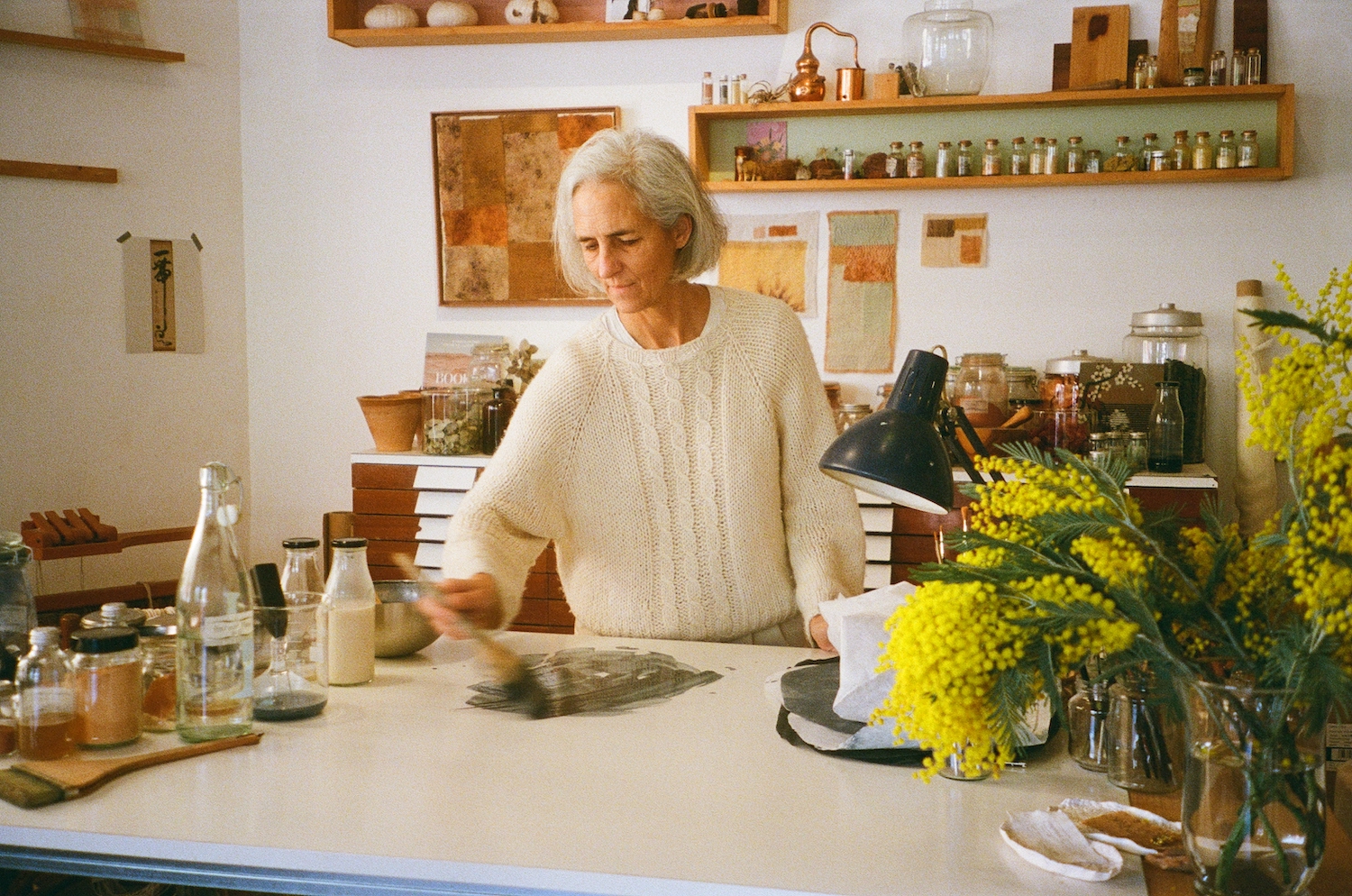
Do you believe in God?
Well… I believe there is an order, a kind of cosmic order, I would say… and I also believe in the evolution of things, that there is some kind of energy that, in a way, connects everything.
I mean, it’s like on our planet—the whole ecosystem, the Earth with its core, the ozone layer… how everything has evolved in a way that feels, I don’t know… organic. I don’t think it’s random, but I also don’t believe there is an entity guiding it.
I think it evolves naturally, and that there is indeed a force behind it.I don’t quite know how to explain it: there is an order, an energy, and there is an evolution—and within that, everything holds a meaning. But I don’t believe in that entity, those gods. I do believe in that energy that connects and drives everything, which you could also call love.
Do you feel this vision translates into your art? What you create feels very intentional, it doesn’t come out of nowhere…Yes. Especially lately. I’ve spent many years working with natural materials, and I’ve been getting closer and closer to them. They hold an incredible force.
Now, what I try to do is listen to them. Rather than imposing my own discourse as an artist or speaking about my concerns—as I used to—I’m in a different place. In the beginning, I worked on themes that mattered to me, like our relationship with patterns: the need to adhere to a norm, a trend, a religion. I did an exhibition called Follow the Pattern, around this idea of how difficult it is for us to make decisions on our own, out of fear.
At that time, I was working with other materials, even plastic beads. I hadn’t yet made that shift towards natural matter.
I’ve always been interested in telling stories: how we consume, how we relate to clothing or to nature. But in recent years—after more than a decade working as a dyer, dyeing fabrics and wool, and living on an island—that connection has deepened. I came from Barcelona, from a big city where everything moves in a different way.
Now I’m at a point where that relationship with nature runs through my artistic practice. And I’m developing it with a kind of devotion and an overwhelming desire.
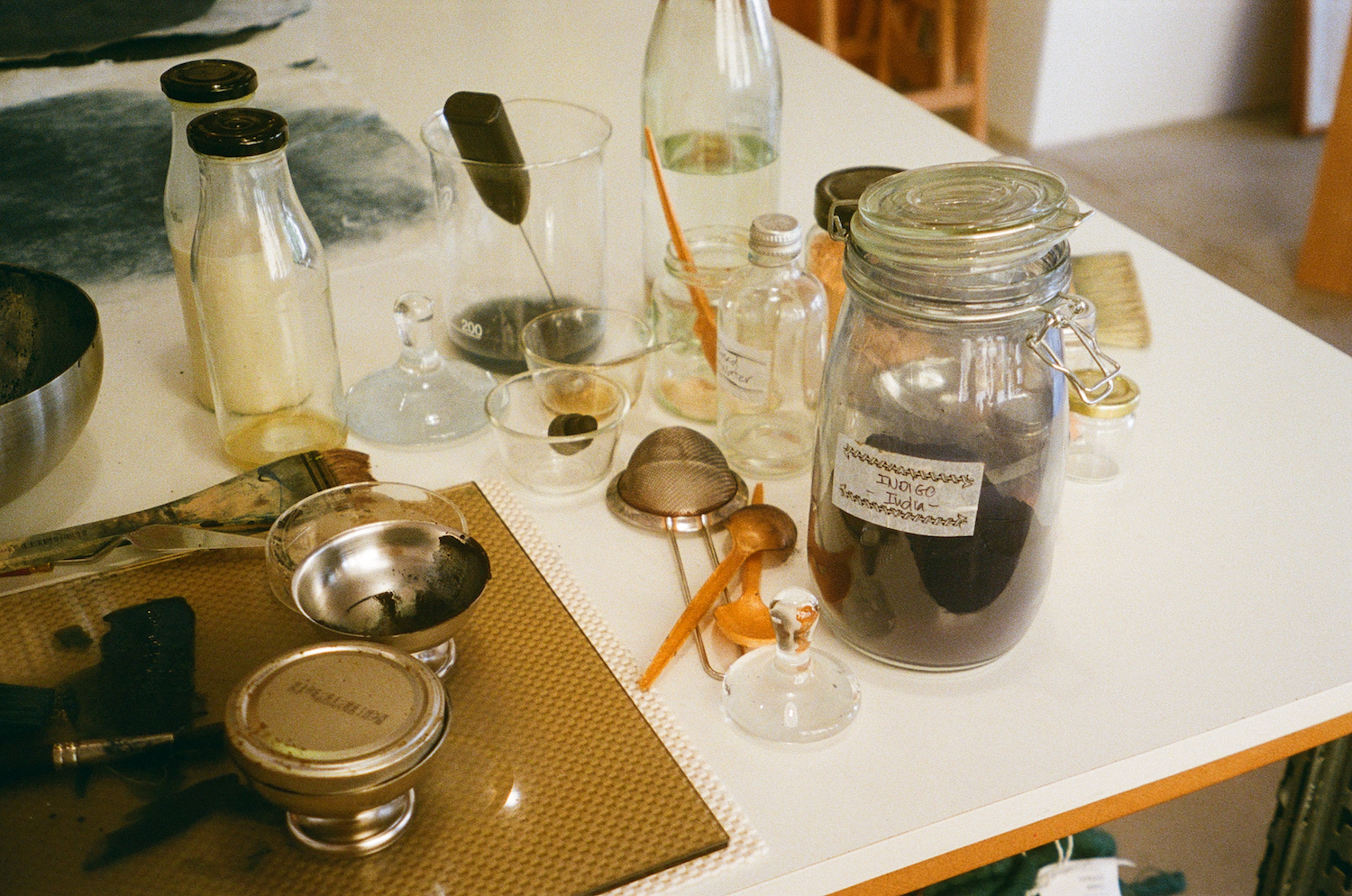
You mentioned that you’re no longer trying to impose. I imagine that requires a great deal of observation…
Yes. I think it’s about becoming aware of “the other.” Our culture is very self-absorbed; as humans, we place ourselves above nature, when in reality we are nature. We’re made up of thousands of bacteria—we are part of all of this.
So, treating matter as an equal—not using it as a tool—and trying to allow it to transcend its own condition is the work I’m doing now, in this phase of creation.
For example, I use pigments, ochres, and each ochre has a different tone. I observe that material, I listen to it in a way. What it conveys to me can be strength, tenderness, impermanence… many things. And from there, I develop the work.
I no longer start from an idea that I want to impose and then look for the material that serves it. Instead, I begin with the material itself. And that’s something I’ve learned over the years, by refining my sensitivity to natural colors: their subtlety, their fragility, how they transform, how they vibrate.
At this point, I can’t imagine creating in any other way. I couldn’t go into an art supply store and buy acrylic paint just to achieve a color.
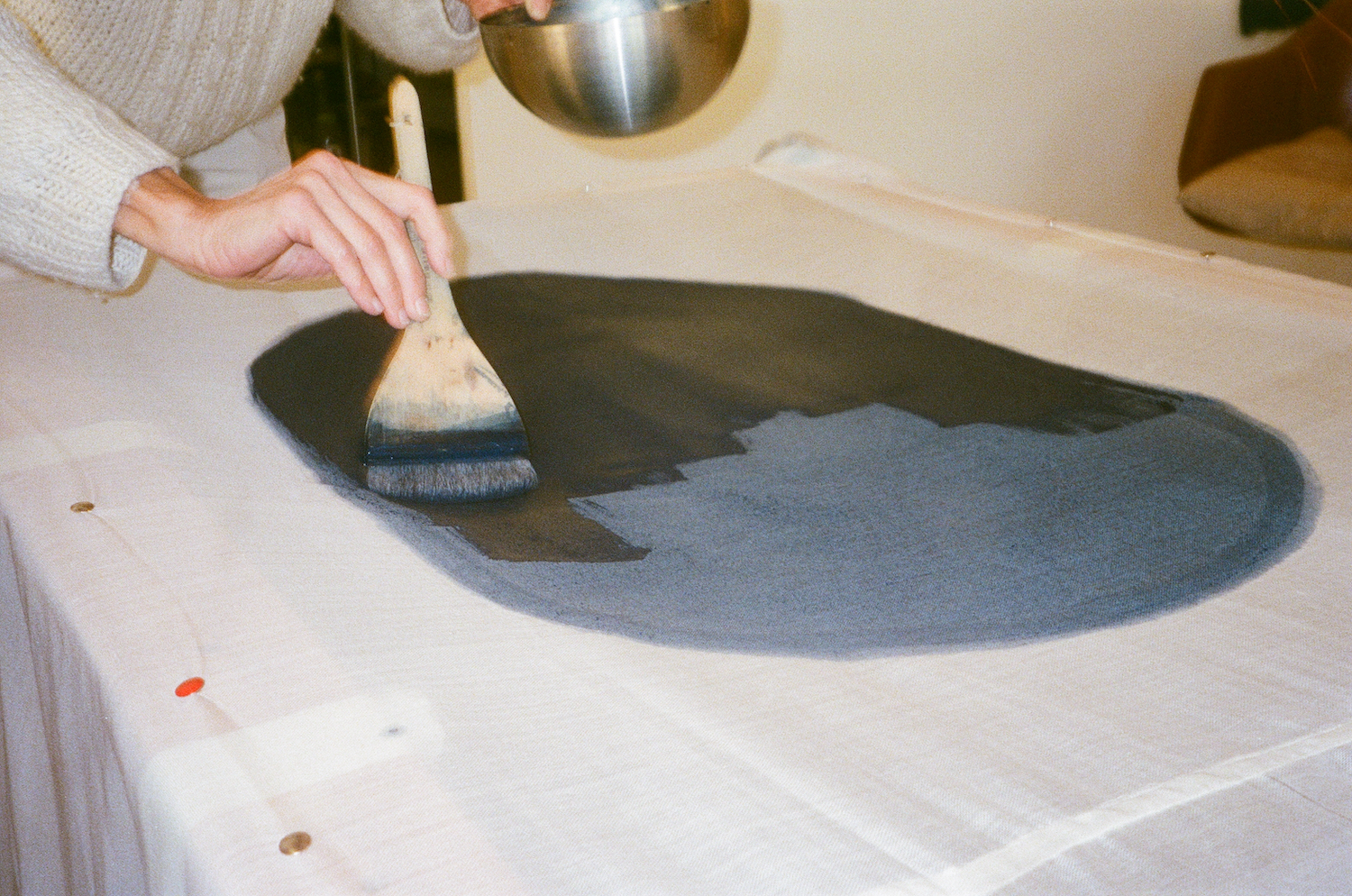
Your palette is nature… would you define yourself as a multidisciplinary artist?
I think I’m a very curious person, very awake and sensorial. I’m fascinated by many things. Sometimes I feel more like a child—touching wool, working with it… but I can’t stay only there, because I also see flowers, and I start incorporating all of that into my language.
When I look back, color has always been there. I’m fascinated by it. I couldn’t work only with a neutral palette—although I suppose I would also learn to find nuances there—but color moves me. It’s emotion: a yellow, an orange, an indigo blue… they stir something in me.
Color is an important leitmotif. And then there is texture, the material itself.
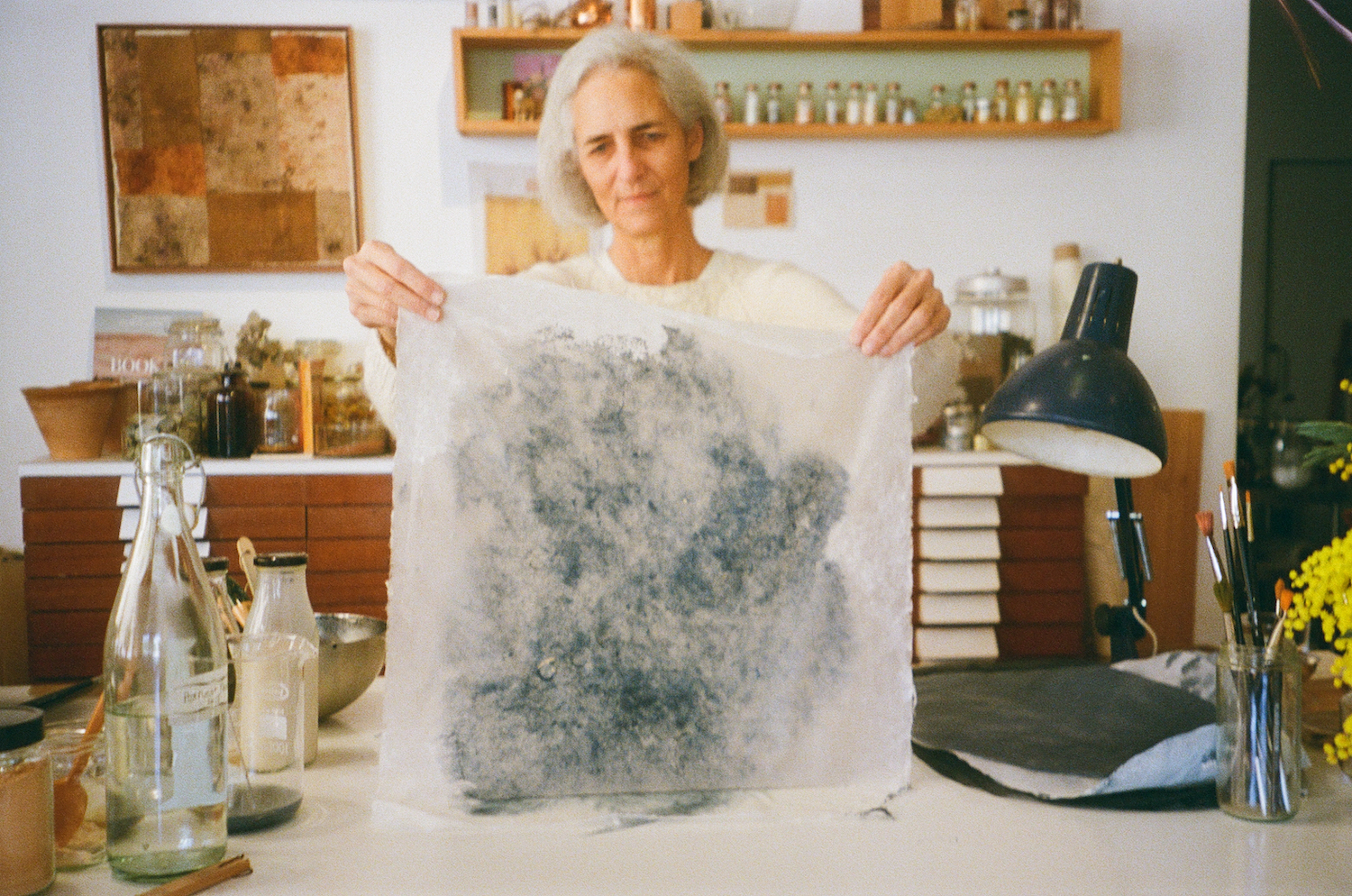
Tell me more about your space, OpenStudio79: when you created it, what your initial intentions were, and where you find yourself now.
I studied Fine Arts at the University of Barcelona, but before that I had studied dental prosthetics. I knew I wanted to do something with my hands, something manual. I had an uncle who was a dentist in Germany and I thought it could be interesting, but I quickly felt it was limiting, that it wasn’t a place where I could truly develop
At Fine Arts I began by painting, working with a lot of color, and little by little I expanded into installation. For me, art is communication: a painting is, color is, matter is… but so is space. I often felt that painting fell short, and I started working in a more scenographic way, using different materials to build a narrative, a dialogue.
I worked as a visual artist in a gallery in Barcelona, and then I moved here, to Mallorca. I became a mother, and that marked a turning point. It was a slower time, and within that space I began to weave. I need to work with my hands, and weaving gave me that place of calm: I could be present with my daughters and, at the same time, enter another state.
Weaving also led me to question the material itself. I didn’t want to work with acrylic fibers, so I started looking for natural ones. That’s when I understood that it was completely different: working with materials that come from petroleum, that are essentially plastic, versus living fibers, with another kind of energy. What passes through your hands, through your skin, matters.
Over time, when my daughters were older, I decided to open my studio to share all of this. That’s how OpenStudio79 was born: a space to share values around creativity, the use of natural fibers, dyes, and artisanal crafts. I’ve always felt that these crafts are a very valuable legacy that needs to be preserved.
There was also something in the art world I didn’t identify with: that more egocentric or market-driven dimension, where the artist almost becomes a product. I needed to open the space toward something else—more collective, more shared.
For years I offered workshops, invited other artists and artisans, started dyeing wool with natural dyes… and the project kept growing. But it also meant being very outward-facing, with schedules, with a kind of shop dynamic.
And there came a moment, not long ago, when I felt the need to return to myself. After so much sharing, I needed to absorb everything I had learned and bring it back into my own artistic practice.
Now the space is no longer continuously open to the public. It activates occasionally for events, but above all it is my studio, a place for creation. I still give workshops—because sharing knowledge feels like one of the most beautiful things there is—but I do them in collaboration with other spaces, like the Escuela Artesana in Inca.
This is where I find myself now.
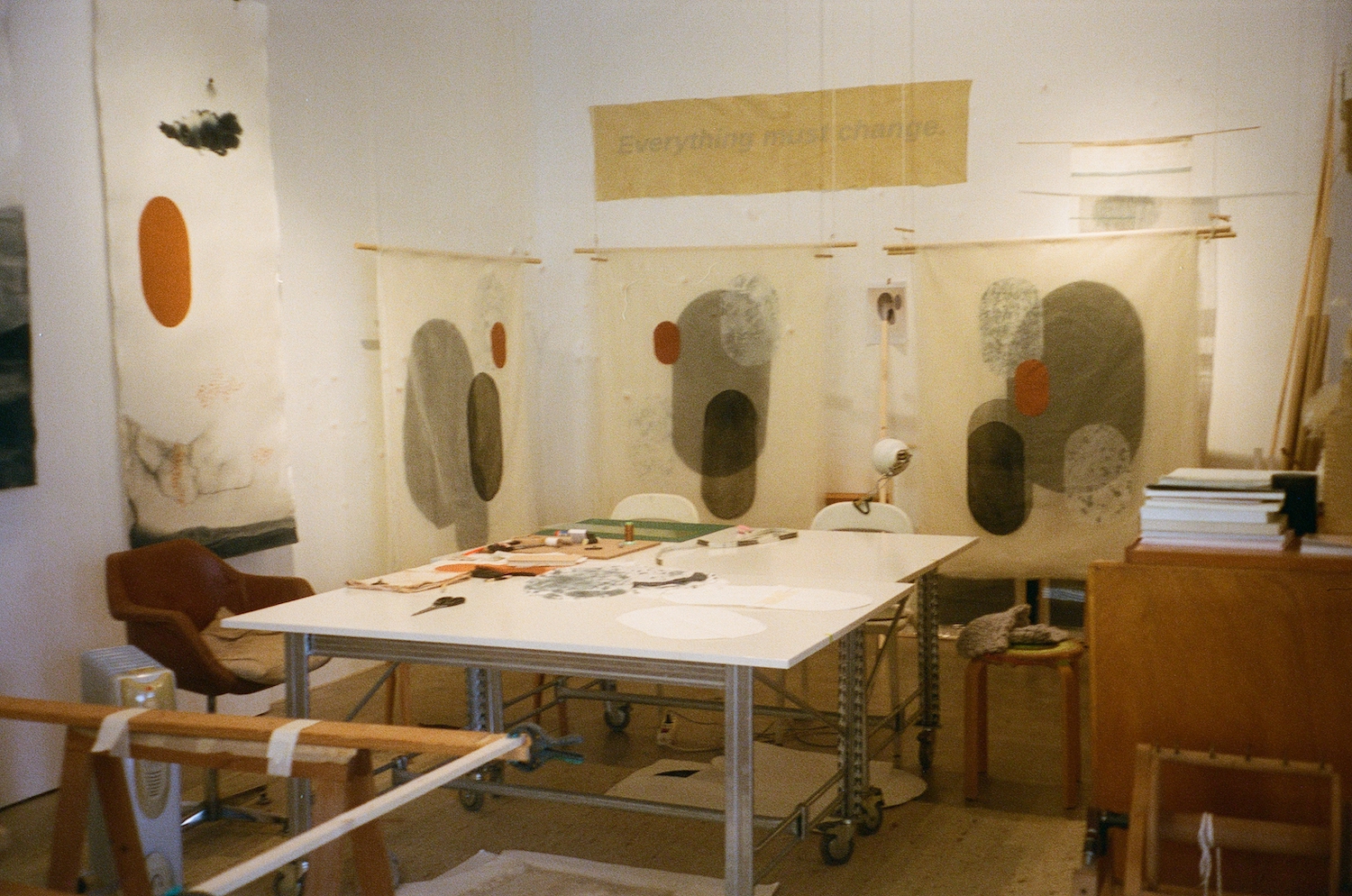
Why is beauty important?
Beauty is a truth.
I believe beauty is life, and that it matters because it is part of a balance. Just as the ugly exists, so does the beautiful. For me, beauty is also a form of spirituality.
Do you question some of the forms of beauty imposed by mainstream society or by the system?
I think that for many, many years we have been—and still are—victims of a very capitalist system, one that is heavily oriented toward consumption, and that in some way blinds us. So what we understand as beauty… I’m not sure it truly is beauty.
Beauty lives in any moment, simply by opening your eyes and feeling: the light, the sun, an embrace. It’s there. But I think our gaze is becoming more and more closed, less porous. And that affects us, because we stop being able to value, to feel.
We live saturated with images, with options, with stimuli. And in that context, perhaps beauty has more to do with simplicity, with austerity, with the space between things.
I think there’s a need to return to that. To empty ourselves a little of everything we are constantly consuming. Even though it’s difficult, because it’s part of how we live today. But we have to take a step back, become aware.
I remember that years ago, an exchange student from the United States came to stay with us, and she always had her phone in her hand, even during meals. We thought it was outrageous. And now we are the ones living like that. And that’s not healthy.
There has to be some kind of revolution.
We need to learn how to feel. And feeling requires time—to pause and appreciate. I think we’ve been poorly taught, and we’ve also become very comfortable in that sense. And of course, it’s much more uncomfortable to sit for an hour looking at a tree, or even ten minutes in a museum in front of a work of art. It feels endless.
Beauty is everywhere, but it requires attention. And that also means changing the way we function. We’ve relied too much on systems—political, social—as if they were going to do the work for us. But I don’t think that works anymore.
I feel that change also happens on a smaller scale: by reclaiming autonomy, developing micro-initiatives, building community, drawing closer to those around us. Helping a neighbor, becoming more involved in everyday life.
We need to return to that—to look around us, to come closer, to support one another. It’s a very important shift that needs to happen.
And perhaps, there too, there is a form of beauty.
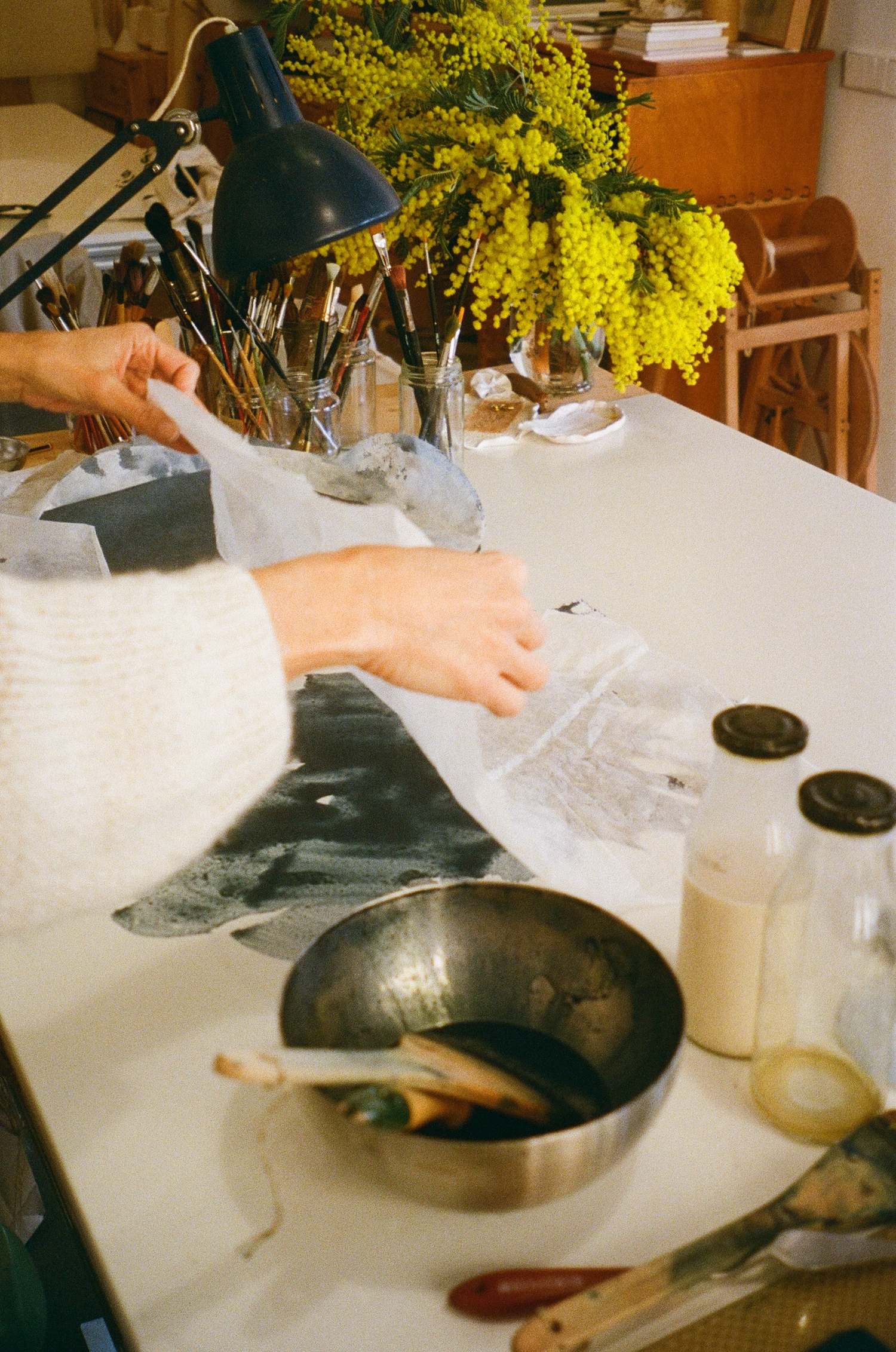
Right now we’re in your studio, in the Santa Catalina neighborhood in Mallorca, an island that is being transformed by foreign capital. This neighborhood is a clear example of the gentrification the island is experiencing. Do you remain optimistic?
I always try to see the positive side of things, but I believe deeply in balance—and right now there is a clear imbalance.On the one hand, there hasn’t been good legislation. And on the other, there is also human ambition. Here, on the island, there is a shared responsibility too: what has been sold, at what price, how that dynamic has been fed.
I feel there is an almost colonial pattern: people with significant purchasing power who come to invest for the quality of life, but who don’t become part of the island’s social, cultural, or traditional fabric. And that is being lost—and once it’s gone, it’s very difficult to recover.
I think it’s important to take care of all of that, because once the flame goes out, it’s very hard to reignite it. In the end, it’s also a question of love—of loving your land. And sometimes it hurts to see what is happening, for example in the Mallorcan countryside, where agricultural land is being lost due to new laws that allow for more construction.
The island should be able to live much more from its own resources. We also have a role to play there: consuming locally, sustaining what is close to us.
But optimistic… I’m not sure. I think this constant ambition of wanting more and more is a burden.
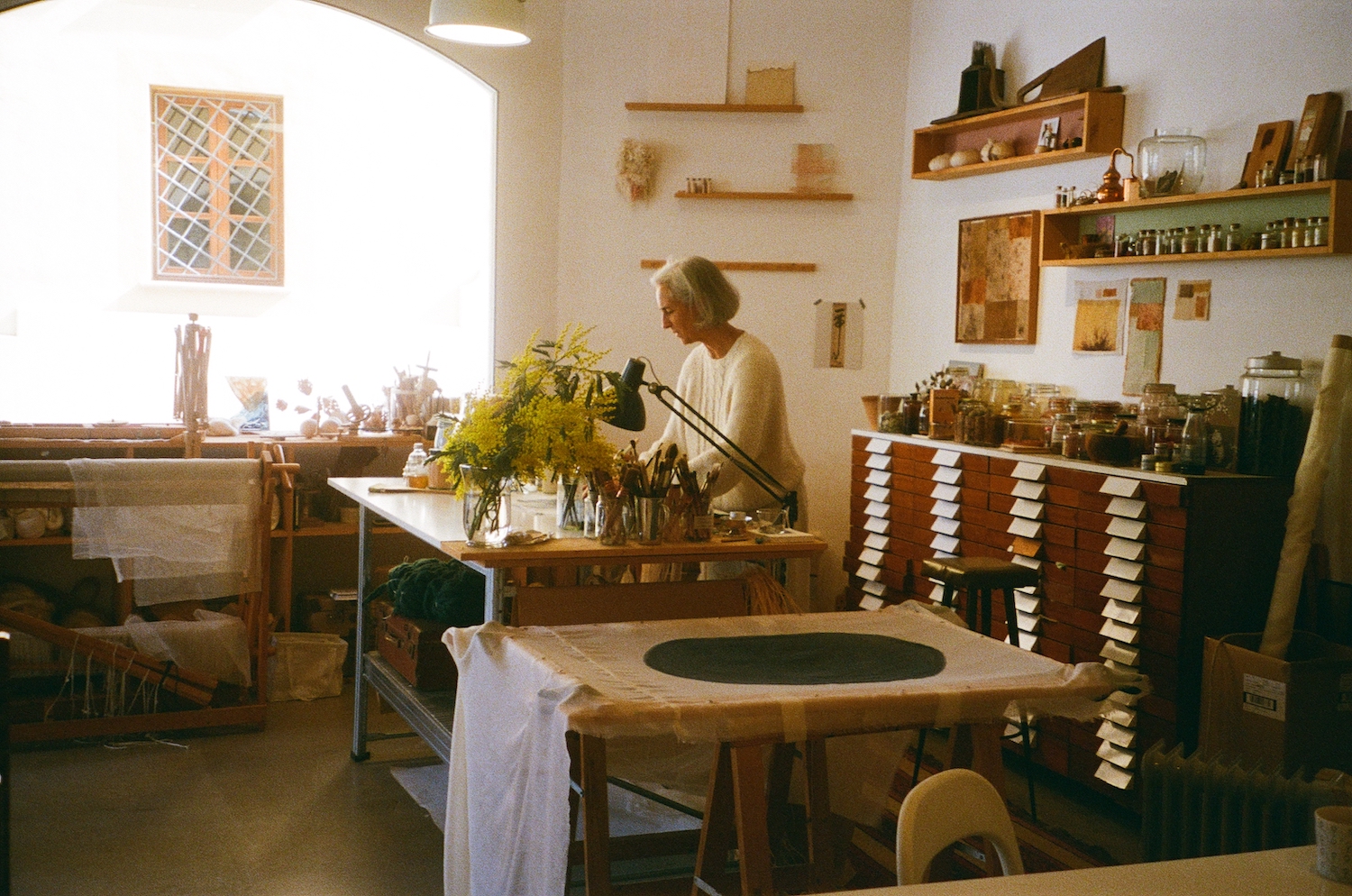
What insecurities do you face when developing your art?
Artistic practice means exposing yourself. The moment you decide to share what you do, you make your vulnerability visible. But that is also where beauty lies.
I’m a very demanding person with myself, but over the years I’ve learned to soften that, partly by observing nature. Nature is in constant transformation—it shifts from one state to another, it flows. Sometimes, when we seek perfection, we become rigid, very static. And breaking away from that—allowing yourself to go with it, even to make mistakes—is part of the process.
I’ve improved in that sense. I feel much calmer now, more at peace.
I always want to close by returning to women, since that’s what Gestar is all about. Which woman is a reference for you?
Wow, so many. But right now, the Chilean artist Cecilia Vicuña comes to mind. She has an incredible sensitivity, she’s an activist, and a strong defender of nature.
I would love to sit down with her one day to talk, or simply walk through a meadow or a forest together.